

The ICE Vehicle Stop Moratorium: Understanding the New Operational Directive and Its Real-World Limits
The Trump administration’s temporary ERO vehicle moratorium creates an unexpected shield for some, but HSI, CBP, and local police exceptions mean the road is far from clear.

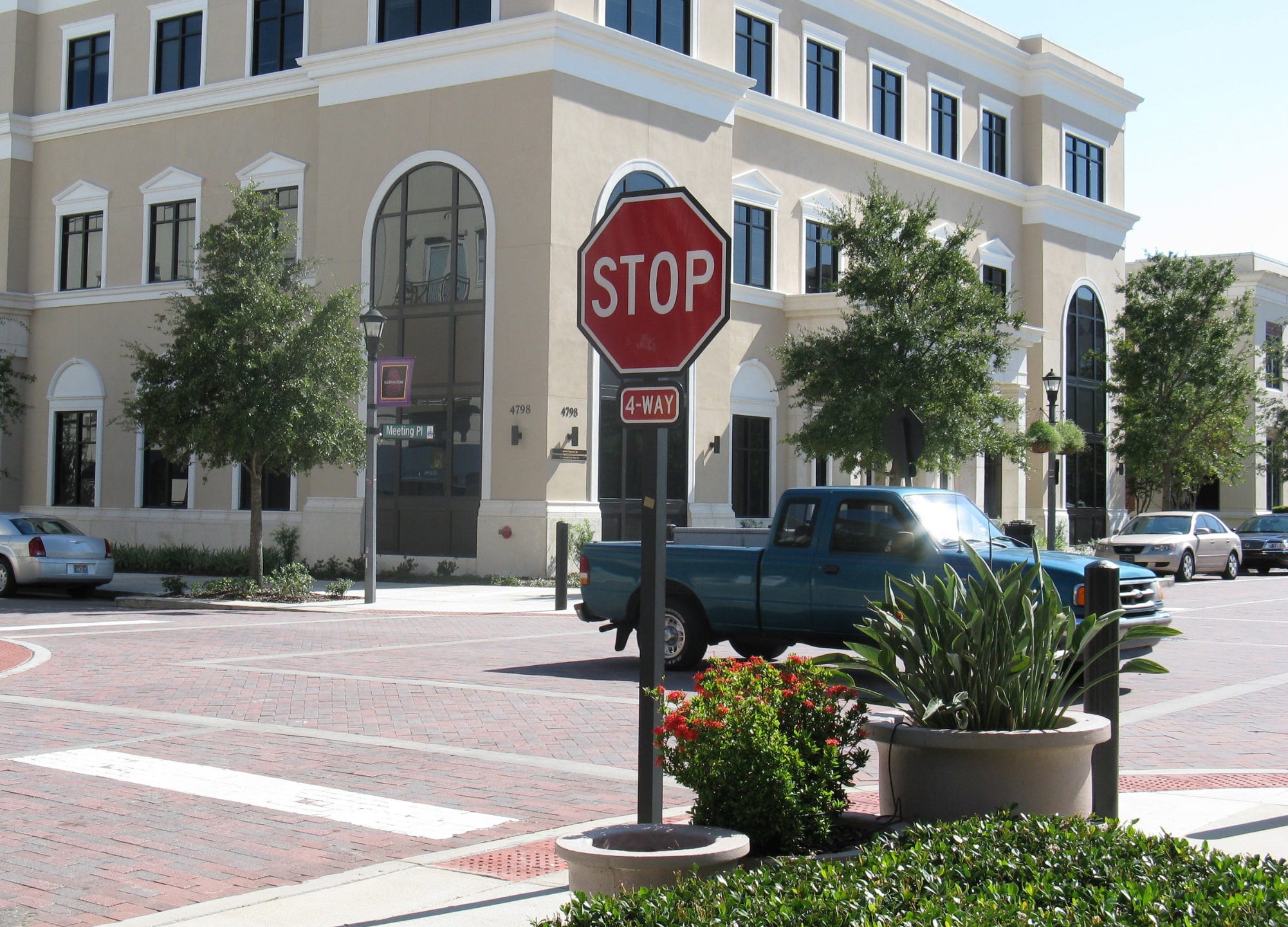
Image by Stephen Vazquez from Pixabay
[Audio Reading Contain Commentary]
In light of two tragic, fatal shootings occurring just a few days apart—and the subsequent wave of intense public scrutiny, local protests, and congressional demands—the Trump administration has taken an unexpected step. Effective July 14, 2026, the Department of Homeland Security (DHS) ordered all Immigration and Customs Enforcement (ICE) field offices to immediately suspend vehicle-related enforcement pursuits and non-urgent vehicle stops.
This article breaks down the administrative mechanics of this shift, the driving forces behind it, what the specific policy dictates, and—critically—the best safety practices for the immigrant community during this temporary pause.
It is important to emphasize that this is a temporary pause specifically on vehicle stops, and it only impacts the Enforcement and Removal Operations (ERO) branch of ICE. It does not bind any other agency or office within the federal government, and because it is an internal administrative measure, there is no set timeline or public expiration date for when it will end.
Part 1: Anatomy of an Administrative Shift: Directives vs. Memos vs. Guidance
When a major policy shift like this occurs, the public often assumes a new law has been passed or a formal regulation has been rewritten. In reality, the Executive Branch relies on a distinct hierarchy of internal administrative tools. Understanding how these tools interact explains why this development occurred so quickly and how it operates under the radar.
Defining the Mechanisms
Operational Directive: A top-down, mandatory command that dictates concrete, physical procedures and tactical field maneuvers. It focuses entirely on immediate action, safety protocols, and deployment of field resources.
Policy Memorandum: A formal administrative letter issued by agency heads used to broadly outline long-term shifting priorities, establish regulatory interpretations, or set wide enforcement standards. Memos are the structural framework of an administration’s legal goals.
Policy Guidance: An instructive tool designed to help case officers and field supervisors interpret existing laws. It focuses on the intellectual framework—how to evaluate a scenario and apply prosecutorial discretion—rather than ordering specific physical movements.
Why This Is an Operational Directive
These tools work together: an agency head might issue a broad Policy Memorandum outlining new enforcement priorities, followed by Policy Guidance on how to interpret those priorities, and finally, an Operational Directive to dictate the exact physical tactics allowed on the street.
The vehicle stop freeze falls squarely under the definition of an operational directive. It does not alter the underlying legal status of immigration laws or change permanent removal priorities; instead, it targets a specific law enforcement tactic—the pulling over and tracking of moving, occupied vehicles.
Because it is an internal, tactical law enforcement directive, the public will likely never see the raw text of the document itself. DHS frequently classifies these field instructions as “Law Enforcement Sensitive” (LES) to protect tactical procedures.
A Highly Credible Development
Despite the lack of a publicly published text, this development is incredibly credible. Multiple major investigative outlets, including The Wall Street Journal and the Associated Press, confirmed the order through statements from current and former senior DHS officials.
The believed catalyst for this sudden shift began on July 13/14, 2026, following a direct, high-level intervention by moderate Republican Senator Susan Collins of Maine. One of the two recent fatal shootings took place in Biddeford, Maine, sparking intense local outcry, anxiety, and protests. Senator Collins, along with the Maine congressional delegation, formally demanded a transparent Office of Inspector General (OIG) and FBI investigation. Collins spoke directly with DHS Secretary Markwayne Mullin, urging an immediate halt to non-urgent field stops while safety protocols are evaluated. Following that discussion, Secretary Mullin directed the nationwide stand-down order to all ICE field offices.
Part 2: The Three Effects of the Directive
According to the best reporting on the matter via The Wall Street Journal, the temporary directive establishes three core mandates:
No Vehicle Stops: ICE ERO agents must immediately cease executing routine traffic or vehicle-related stops and pursuits nationwide.
The Body-Worn Camera Requirement: ICE operations may not proceed unless at least one member of the active operational team is equipped with a functioning body-worn camera. While a full rollout of body cameras is anticipated within the next 60 days, operations across branches—including court-adjacent or in-house enforcement—are heavily restricted until teams meet this one-camera threshold.
Re-evaluation of Training: ICE may be conducting a re-evaluation of its vehicular stop and de-escalation training protocols. While a “reevaluation” is not a formal commitment to permanently alter the manuals, it highlights a known structural gap: historically, ICE field training regarding moving vehicle dynamics has been notoriously minimal.
Despite the inherent danger of vehicle pursuits, the current administration had relied heavily on vehicle stops as a primary method of interior arrest. Field offices preferred them over residential “knock-and-talk” operations because they minimized officer safety risks associated with entering private buildings, had a higher mathematical yield for “collateral arrests” (detaining passengers whose information was not on the target warrant), and capitalized on the fact that individuals enjoy far fewer Fourth Amendment constitutional protections against searches inside a vehicle than they do inside their own homes.
Part 3: How the Immigrant Community Can Prepare
Because this directive specifically halts ERO vehicle stops, individuals with existing final orders of removal—who are the primary targets of ERO fugitive teams—are directly affected by this operational freeze. Paradoxically, for the duration of this temporary pause, individuals are technically safer from ERO while inside a vehicle than they are outside of one.
With vehicle stops off the table, ICE ERO must rely on alternative methods to execute final removal orders:
Administrative Notices: Mailing a formal notice ordering an individual to surrender themselves to a local field office.
Residential Operations: Showing up at a home to execute an administrative immigration warrant.
Curbside Pickups: Waiting for an individual to physically step away from their home or vehicle onto public property (sidewalks, driveways, parking lots) to effectuate the arrest.
Practical and Spatial Safety
Knowing these parameters allows individuals to understand where they are most vulnerable. For example, if ICE agents arrive at a private residence, they rarely possess a judicially signed warrant (unless it involves a major criminal matter). Under constitutional principles, individuals are under no legal obligation to open the door to a standard administrative ICE warrant, meaning they can legally choose to ignore the knock.
Similarly, because the directive forbids agents from engaging or stopping an occupied vehicle, an individual who is already inside a car is temporarily insulated from an ERO tactical stop.
Consequently, the moment of highest vulnerability is the physical walk between the front door of the home and the door of the vehicle. Because ERO agents are restricted to curbside or residential contact, any time spent on an exposed driveway or sidewalk presents an opening for a field arrest. To counter this, community members might be adjusting their spatial routines: maximizing the use of attached garages, parking vehicles as close to front entryways as physically possible, and moving quickly through shared outdoor spaces to eliminate the window for a curbside pickup.
Part 4: This Does Not Affect HSI, CBP, or Local Law Enforcement
It is vital for the community to avoid a false sense of security. This operational directive is narrow. It does not create a blanket protection zone on the road, as it leaves several major law enforcement entities completely unencumbered.
Subpart A: Homeland Security Investigations (HSI)
HSI is the primary criminal investigative division of ICE. Unlike ERO, which handles administrative immigration violations and final removal orders, HSI focuses on transnational crime, narcotics, human trafficking, and serious federal offenses. If an individual has an underlying criminal matter—or an active removal order tied directly to a criminal offense—they are completely excluded from this protection. HSI retains full authority to execute targeted vehicle stops and arrests.
Subpart B: Customs and Border Protection (CBP)
This directive does not touch CBP or Border Patrol in any capacity. CBP retains its expansive authority to conduct vehicle operations within its standard jurisdictions:
Fixed Highway Checkpoints: Permanent inspection stations located along highways throughout border states remain fully operational.
Temporary / Non-Fixed Checkpoints: CBP maintains the legal power to establish tactical, temporary checkpoints to check the immigration status of motorists.
Roving Patrols: CBP agents are still legally authorized to conduct roving patrols—frequently referred to as “Kavanaugh stops” following historical jurisprudence like Perdomo v. Nome—which give agents wide latitude to stop vehicles based on specific, articulable factors in border regions. While the frequency of roving patrols has dipped following structural administrative shakeups, the legal authority remains active, and CBP is entirely unaffected by the ERO vehicle freeze.
Subpart C: Local Law Enforcement and the 287(g) Dynamic
Local police departments and sheriff’s offices maintain full autonomy to pull over any motorist for everyday traffic violations (speeding, broken taillights, expired registration). How a local stop impacts an undocumented motorist depends entirely on local jurisdiction and whether the area operates under a 287(g) agreement, a program that deputizes local officers to perform specific federal immigration functions.
[Local Traffic Stop] ---> (Is it a 287(g) Jurisdiction?)
                                |
         +----------------------+----------------------+
         | Yes                                         | No
         v                                             v
[Officer Checks Status]                      [Standard Citation/Release]
         |                                             |
[Holds Driver in Vehicle]                              v
         |                                    (ICE cannot intervene
         v                                     via routine stop)
[Calls ICE ERO Field Office]
         |
         +---> Will ICE respond?
               (Likely yes, if framed as assisting local law
                enforcement under explicit directive exceptions)
In a 287(g) state or county, local officers frequently question motorists about their immigration status during a routine stop. If they discover a final removal order, they will often hold the individual at the scene and call the local ICE field office to hand them over.
Will ICE answer that call during this moratorium? Yes. The internal directive expressly carves out an exception for operations conducted in tandem with partner local law enforcement agencies. If a local officer initiates the stop under state traffic laws and requests assistance, ICE ERO field agents are fully permitted to respond, arrive at the scene, and take the individual into custody without violating their internal operational directive.
Conclusion
The sudden suspension of ICE ERO vehicle stops represents a significant, reactive shift in interior enforcement tactics, born out of immense political pressure following two tragic line-of-duty fatalities. Driven by an operational directive rather than a permanent change in law, this temporary moratorium heavily restricts routine ERO field pursuits while introducing a strict body-camera bottleneck. However, because the order provides zero protection against HSI criminal investigations, CBP border operations, or local police cooperation in 287(g) jurisdictions, the immigrant community must remain vigilant, recognize that highway vulnerabilities persist, and understand that this administrative pause could be lifted at any moment.
Sources
Jordan, M., & Hackman, M. (2026, July 14). Homeland Security Orders ICE to Halt Vehicle Stops Following Fatal Shootings. The Wall Street Journal.
Whittle, P., Willingham, L., & Brook, J. (2026, July 14). Trump administration orders ICE to suspend most vehicle stops after deadly shootings. Associated Press / PBS NewsHour. https://www.pbs.org/newshour/politics/trump-administration-orders-ice-to-suspend-most-vehicle-stops-after-deadly-shootings
Tier, J. S. (2026, July 14). DHS Temporarily Freezes ICE Vehicle Pursuits Nationwide Amid Congressional Scrutiny Over Recent Agent-Involved Shootings. The Daily Wire.
And you believe these garbage humans? Ouch!